
Cemetery Crawl Around Fishkill
Join us for a unique and meaningful journey through history with the Cemetery Crawl Around Fishkill — a self-guided tour of three historic cemeteries where Revolutionary War patriots rest.
Fishkill played a vital role in the American Revolution, and many who helped shape our nation are buried right here in its soil. This special event takes you to their final resting places, sharing their incredible stories and honoring their legacy.
Use this page as your guide to visit hallowed grounds and learn each patriot's story.
Click on each site below to discover its interred rebels

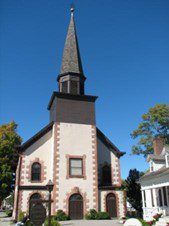
Trinity Episcopal Church Graveyard: 1200 Main Street
Ezekiel Green was born in Fishkill on Sept 16, 1759, the son of Israel and Rachel Thorne Greene.
He served in Colonel Abraham Brinckerhoff’s Militia, Dutchess County’s 2nd Regiment, as a private in 1779 and 1780 and for it received £1, 11 S and six and ¾ d.
Ezekiel also served in Colonel Roswell Hopkins’ 6th Dutchess County Regiment of Militia, in 1777 at Peekskill, and in Fishkill in 1779, and on October 9, 1785, received £ 3 3 s and 3 d, the same pay as the other men. His pay was witnessed by George Brinckerhoff.
He was perhaps a blacksmith, as evidenced by his will, which leaves his eldest son James his choice of one of the two sets of blacksmith tools that belong to the shop.
Ezekiel Green has a brown sandstone bedboard-style gravestone. Unfortunately, over half of it has delaminated, removing most of the epitaph. What is left reads “Sacred to the memory of EZEKIEL GREEN who departed this life the 7th February 1817 aged 57 years 4 months and 21 days.


RICHARD R SOUTHARD (1763-1827)
Richard R Southard, son and grandson of Richard Southard, was born in Fishkill in 1763. A number of Southards, beginning with Richard’s great-grandfather Thomas Southard, came to Fishkill from Hempstead in the early 1700s. The Southard family owned a large swath of property south of the Fishkill Creek, directly below Trinity Episcopal Church.
On Aug 15, 1775, while a member of Captain Southard’s Company, he refused to sign the Articles of Association, along with his brothers Thomas and Daniel and his cousin Gilbert.
Richard served as a private in Colonel Abraham Brinckerhoff’s 2nd Regiment of Dutchess County Militia, as well as in Colonel Roswell Hopkins' 6th Regiment of Dutchess County Militia.
Richard’s stone is of simple white marble, with Scotia shoulders. The inscription reads “Sacred to the memory of Richard R Southard who died November 25 1827 aged 64 years.
BENJAMIN HUNT (1748-1834) LOYALIST
Benjamin Hunt was born in 1748 in Westchester. His father, Benjamin, was a Loyalist Lieutenant Colonel during the Revolution, which likely influenced Benjamin to enlist in the infamous Colonel Tarleton’s Regiment of Dragoons, where he served as a Lieutenant.
He married Elizabeth Gedney in 1770 in New York City in the Church of England by Samuel Seabury, Rector of Westchester. After the war, they joined his father in Digby, Nova Scotia, where their son Joseph Gedney Tarleton Hunt was born, and where all three were baptized in the Anglican Church. By 1801, the family had returned to Brooklyn and then relocated to Newtown, Queens.
They had a daughter, Henrietta Maria, born in 1810. Benjamin died in 1834 and was buried in the cemetery of Trinity Episcopal Church. His daughter Henrietta had married James Oppie of Westchester in 1831, and by then James, a lawyer, and Henrietta were living in Fishkill.
Benjamin Hunt and his wife Elizabeth Gedney have one of most elaborate monuments in the churchyard at Trinity Episcopal. The white marble obelisk stands almost 12 feet tall and is paired with obelisk for his daughter and son-in-law James and Henrietta Oppie. It is the only one in the churchyard surrounded with an ornamental iron fence.
DANIEL CROMMLIM VERPLANCK (1762 – 1834)
Daniel Crommelin Verplanck was born in New York City in 1762. He attended Columbia College, graduating in 1788, studied law, was admitted to the bar, and practiced law until 1789. After his mother’s death the family moved to Mt Gulian fulltime in 1803. Upon the death of his father Samuel in 1820 he became the largest landowner in Dutchess County and the first member of the family to make Dutchess County his permanent home. The house in Fishkill became the headquarters of General Friedrich Wilhelm von Steuben. After the War the Society of Cincinnati was formed at the house by officers, who knew that Congress wouldn’t take care of them after the war. The Society of Cincinnati was a Fraternal order, with each officer having to put in one month’s pay to join. It’s a hereditary society, passed down to one male descendant.
He married Elizabeth Johnson, 1764-Feb 6, 1789 of Stratford, Connecticut, on October 29th,1785. Her father, William Samuel Johnson, was a delegate to Congress during the Revolution and chaired the five-member Committee of Style, which framed the final form of the Constitution. After her death then married Ann Walton on Nov 17, 1790.
Daniel represented Dutchess and Putnam Counties in Congress from 1803-1809 and was the first Judge of the Court of Common pleas for Dutchess County from 1828-1830.
He died suddenly, and his body was found in the little woods just south of the house, where he was walking home from the post office, as he commonly did.
ELIZABETH GEDNEY HUNT (1770-1846)
Elizabeth Gedney Hunt was born in Eastchester, Westchester in 1761. Her father, Joseph Gedney II was a Loyalist who went to Nova Scotia in 1789. Of her six siblings, three sisters married and stayed in New York, the oldest brother stayed in New York, while her youngest sister and brother went to Nova Scotia with her father.
On “the 7th day of January 1770 Benjam Hunt and Elize Giedny were married according to the form of Solmization of Matrimony in the Church of England” by Samuel Seabury Rector of Westchester.
After the war, they moved to Nova Scotia. By 1801, the family was back in Brooklyn, and then Newtown, Queens. After her husband, Benjamin, died in 1834, she applied to the British Vice Consul in New York City for a pension in 1835, as the widow of an officer who had died on half pay. There is no record that she received the pension.
Benjamin’s widow, Elizabeth, went to Fishkill to live with her daughter Henrietta and son-in-law James Oppie. She lived until 1846 and was buried at Trinity with her husband.
SAMUEL VERPLANCK (1739 – 1820)
Samuel Verplanck was born in New York City on September 19, 1739. His father, Gulian Verplanck, was one of the three patentees of the Rombout Patent. He had built the house, named Mt Gulian, in Fishkill between 1730 and 1740.
Samuel graduated from King’s College in its first graduating class in 1758. He then went to Holland, where he worked for his maternal uncle, Daniel Crommelin, the head of the banking house Daniel Crommelin and Sons, until 1763. He returned to New York City that year and established himself as a wholesale importer and banker. While in Amsterdam, he married his cousin Judith Crommelin in April of 1761. In May 1775, he was appointed a member of the Committee of Safety, tasked with taking charge of the city government upon the seizure of the public buildings.
While Samuel supported the Revolutionary cause, his wife Judith favored the British. She remained at the house at #3 Wall Street when the British took Manhattan in 1776, while Samuel withdrew to Mt. Gulian. Here she entertained Lord Howe while the British occupied the city. The couple’s estrangement continued after the war, and she remained in the city, where she died in September of 1803 and was buried on Sept 17th in Trinity Churchyard. After that, the house was closed and most of the furnishings were sent to Mount Gulian, where they remained until they came to the Metropolitan Museum of Art.
Samuel died in January of 1820.
Isaac Van Wyck (1755-1811)
Isaac was born on October 27, 1755, to Cornelius C Van Wyck and Altje Brinckerhoff. In 1774, He married Elizabeth Van Wyck, his second cousin, who was born on July 17, 1757.
He first served in Col Jacobus Swartwout’s Company of Militia, as a 2nd Lieutenant, in 1776. He rose through the ranks of Colonel in Abraham Brinckerhoff’s 2nd Regiment of Militia, beginning as a Captain and ending up as a Lieutenant.
As a Captain in Abraham Brinckerhoff's Regiment, in Brigadier General Swartwout’s Brigade of Dutchess County Militia, in a General Alarm to repel the enemy, he was in charge of the payroll for his unit.
After the Revolution, he was a member of the New York Legislature in 1795, 1810, and 1811.
Isaac was the owner of the Van Wyck homestead when it became the headquarters for the Fishkill Supply Depot from 1776 to 1783. The Fishkill Supply Depot Historic Site was one of the largest, continuously operated military bases of the American Revolution. Many heroes of the American Revolution, including George Washington, Alexander Hamilton, John Jay, the Marquis de Lafayette, Baron von Steuben, and Israel Putnam, spent time in this house.

Sketch of the Van Wyck Homestead Museum
His grandfather, Cornelius, had built the homestead after acquiring 959 acres from Madam Brett in 1732. Isaac inherited the property from his father in 1767. He lived there with his first wife, Elizabeth, and their nine children (five girls and four boys), although only six of them lived to adulthood. After Elizabeth's death in 1800, he married Sarah Brett, granddaughter of Madam Brett and the widow of Abraham Brinckerhoff, his commander during the Revolution.
In 1785, he was granted a charter by the state of New York for the first stage line between New York City and Albany. He was “privileged to erect, set up, carry out, and drive stage wagons between New York City and Albany on the east side of the Hudson River for a period of ten years.” The company was obligated to maintain two covered wagons, each to be drawn by four able horses. Early in June 1785, the line began to operate. It carried passengers and mail, making two trips each way twice a week. He had two partners, Talmadge Hall and John Kinney. The stagecoach line ran until 1851.
The halfway point of this trip was Fishkill, so as part of this business, he built the Mansion House in 1789 to accommodate the travelers. It had dining and cooking facilities on the first floor, guest rooms on the second, and a ballroom that filled the entire third floor. It was also a popular spot for the locals. The building still stands across the street from the First Reformed cemetery – the first floor now houses Charlie’s Shoe Repair and RJW Renovations, with apartments on the second floor.
Isaac died on Aug 28, 1811 in Red Hook at the age of 55 at the home of his mother Altje Brinckerhoff, who had married Zachariah Hoffman in 1775 after the death of her first husband Cornelius C. Van Wyck in 1767.
George G Brinckerhoff (1743-1812)
George G. Brinckerhoff was born in Flushing, Queens, on April 12, 1743, to Jores Derrick (1705-1765) and Elizabeth Snedeker (1708/09-1764) Brinckerhoff. George married Elizabeth Wilcox on Dec 21, 1769, probably at the Fishkill Reformed Church. She was born in Killingworth, Connecticut.
In about 1769, he purchased a small house and farm from his brother, John G. Brinckerhoff, in what is now East Fishkill. After the war in 1785, George G. built a 4-room addition to the original east wing of the house. This is the largest section of the house, featuring a spacious center hall adorned with elegant architectural details. This house is now the centerpiece of the East Fishkill Historical Society, at 68 Kensington Drive, Hopewell Junction.
George G. Brinckerhoff Enlisted in the 2nd Regiment of the Dutchess County Militia under Colonel Abraham Brinckerhoff in October of 1775 as a Lieutenant and was promoted to Captain on June 28th, 1778. Colonel Abraham was his 2nd cousin, once removed. There were many Brinckerhoffs in Colonel Abraham’s regiment. He and his brother John, also a Captain, were also active in the Committee of Safety. George witnessed most of the payments to the enlisted men. A second cousin, George Brinckerhoff, was yet another captain in the regiment.
George and Elizabeth had no children. He died on April 26th, 1812, and his farm reverted to his brother, Captain John G. Brinckerhoff. The house and property were sold in 1814, and Elizabeth moved from the farm to be closer to her Wilcox family.

JOHN NATHAN BAILEY (1767-1846)
John Nathan Baily was born on November 11, 1767, the son of Nathan Bailey and Abigail Pine. He died Dec 16, 1846, in East Fishkill.
In Local Tales and Historical Sketches, written in by his son, Henry DuBois Bailey, Henry writes about an event that happened when John was about 10 years old. Smallpox had broken out at the Fishkill Supply Depot south of the village. The infected men were taken to the vacant Episcopal church. John, visiting the men, caught smallpox, and his father was informed that he needed to be quarantined with the soldiers. His father wanted to keep him home due to his age, and it was allowed, as long as they kept him apart so that he wouldn’t spread it to others. So he was placed in a bedroom, and their enslaved man Caesar, who had had the smallpox, took care of him. John’s mother, Helena, who hadn’t had smallpox, became almost “frantic with grief” at her inability to see him, so Caesar and her father-in-law put a window light in the door, “which afforded the mother great consolation to look through the window and see her son.” John recovered after a severe illness and lived to the age of 79.
In 1797, he was an ensign in Lieutenant Colonel Joshua Ward’s troop of horse under Captain Frederick Uhl. In 1800, he was promoted to Lieutenant in Lieutenant Colonel Theodorus Bailey’s Regiment (his paternal first cousin), and in 1803, he was transferred to Lieutenant Colonel Commandant James Sleght’s regiment as a Lieutenant. He was a member of the Committee of Correspondence in 1800, writing in opposition to the Federal Party presently in control.
Frederick Van de Merken Westbrook (1753-1827)
Westbrook was born in Mill Hook, Machackameck (Deer Park) Orange, New York. He was named after his maternal grandfather, Frerik Van der Merken. He married Sarah DuPuy, 1761-1785, in about 1780. They had one son, the Rev. Cornelius Dupuy Westbrook, who served as the minister of the Fishkill Reformed Church from 1805 to 1830, and also edited the “Christian Intelligencer,” a widely read newspaper of the Reformed Dutch Church.
Fredrick volunteered for military service in Ulster County during the period of Joseph Brant’s incursions on the frontier. Westbrook was on the payroll of Captain John A. Hardenbergh’s company of Colonel Levi Pawling’s Regiment, General George Clinton’s Brigade in June of 1777, where his wages were $27 a month. He was promoted to Brigadier General on May 20, 1812, for the 23rd Brigade of Infantry. A regiment for the War of 1812 was raised in Ulster County under Colonel Hawkins and stationed at Staten Island, but returned home a few months later. After the capture of Washington, D.C., in 1814, there was great alarm, and people were expecting British ships to be approaching; troops were needed to defend the New York harbor. So in September 1814, General Westbrook and 500 troops embarked on sloops from Kinston Point for the New York harbor. But they saw no real warfare and returned in December.
He died in Fishkill on Dec 6, 1827 while visiting his son.
JOHN GRIDLEY (1749-1830)
He began his service in May of 1776 in Massachusetts as a 1st Lieutenant in Lieutenant Colonel Thomas Crafts' Artillery regiment and was paid from September 1776 to February 1777 for Colony and Continental service, when he was commissioned January 1, 1777, as Captain Lieutenant[sic] in Colonel John Crane's Regiment of Artillery, earning $40 a month. He was serving in Fishkill in July of 1777. He was still on the muster roll in February-March of 1778. In June 1778, he was at Valley Forge, and then in July, he was at White Plains. In 1779, he was stationed at West Point from August to the beginning of October. He is still on the rolls from August 1782 to May 1783.
According to his pension application, he was wounded during the Battle of Brandywine, where Lieutenant General Sir William Howe's British forces had decisively defeated General George Washington's Continental Army. This setback ultimately allowed the British to capture Philadelphia.
At the Headquarters of Elijah Lands at West Point, March 27th, 1782, a Court of Enquiry was held for a possible Court Martial. Captain Gridley was charged with “disobedience of orders in exceeding the limitation of his furlough twenty-six days. The Court is of the opinion that the reasons alleged by Capt. Gridley for exceeding his furlough, the time specified in the charge against him is sufficient to excuse him from repercussions. The Genl. approves the opinion of the Court in the foregoing instances and orders Capt. Gridley unhanded from arrest.”
He was an original member of the Society of Cincinnati, established in 1783.
As the war ended, he settled in New York. He married Anna Horton, daughter of Joseph and Jannetje Van Voorhis Horton. By 1800, the family was living in Fishkill, where he bought a house in 1802. Captain Gridley kept a Hotel opposite the Dutch Church in Fishkill.

John Brinkerhoff (1703-1785)
John (Jan) Brinckerhoff was born on Long Island on Oct 15, 1703, the son of Derick Abraham and Aletta Couenhoven Brinckerhoff. Derick was one of the first to purchase land from Madam Brett, when he bought two parcels of land from her: one of 1,600 acres and the other of 400 acres. Five hundred acres of this were still in family hands until the early 2000s. The tract was developed by his four sons, Abraham, John, Isaac, and Jacob. John built a stone house in Swartoutville (Lomala) in 1738, which is still standing today. He had married Jannetje Van Voorhis in 1725 in Flatlands, Kings County.
He was a Captain in Cantine’s Regiment of Militia in 1778-1779, and in the Dutchess County Militia, 2nd Regiment. Captain John Brinckerhoff also pastured 140 public cattle and was paid for doing so. John later became a Colonel during the Revolutionary War and was a friend of George Washington. In the fall of 1778, Washington made the stone house his headquarters on occasion. He occupied the best parlor-bedroom, and a family tradition holds that Mrs. Brinckerhoff personally saw to it that the Commander-in-Chief was warmly tucked in on the cold autumnal nights.
His daughter, Altje, 1732-1774, had married Dr. Theodorus Van Wyck in 1754, and they lived with her parents after her marriage so that they wouldn’t live alone. After the death of her parents, her son, Theodorus Brinckerhoff Van Wyck, inherited the house.

Mrs. Catherine Schutt (1750-1836)
A humble marble stone marks the grave site of Catherine Schutt, a Fishkill (Colony of New York) resident who lived from about 1750 until her death on Mar 20, 1836. The inscription on her gravestone informs us she was married to Frederick Schutt.
Historical records elucidate the daily lives and expected duties of Colonial women, but within the last 30 years, the individuality and flexibility of social norms have been loosely explored. Women like Aleida Schuler Livingston, wife of Robert Livingston the Elder, and Madam Brett, wife of Francis Rombout, broke contemporary social norms for women by serving as heads of their respective family estates, as businesswomen, and as planners. For elite Colonial New York families, norms could be bendable to maintain the stability and profitability of family properties and business interests. However, Catherine Schutt (like other Fishkill women) was not of an elite class, but still broke traditional social norms by engaging in a 1776 protest against the locally prominent Brinckerhoff family's tea prices, which they deemed were unfairly high.

The war with England impacted the social, economic, political, and material lives of the colonists in large cities like Boston and smaller communities like Fishkill, NY. Within this context, we learn from Henry D. B. Bailey’s 1874 work, Local Tales and Historical Sketches, that Catherine Schutt successfully led a group of about 100 women who demanded that Abraham Brinkerhoff sell them tea at a price of 6 shillings per pound, which they deemed reasonable (Bailey 1874: 343). Today, six (6) shillings per pound equates to $153.24 USD. Schutt and the mob threatened to destroy Brinkerhoff’s tea, which prompted him to comply with their request. Additional research is needed to learn more about Mrs. Schutt’s financial and social status, and that of the other women who attended.
Colonel Jacob Griffin (April 1730 – March 20, 1800)
Colonel Jacob Griffin of Fishkill, New York, was a Revolutionary War militia officer, farmer, tavern keeper, landowner, and community leader whose property served as a center of Patriot activity in Dutchess County during the early days of the American Revolution. Jacob Griffin was born in April 1730 in Westchester, New York, the son of a family with deep colonial roots. He was a descendant of Edward Griffin of Flushing, Long Island, who was among the 30 signers of the Flushing Remonstrance in 1657.
Griffin operated a popular tavern along the road that is now NY Route 82 in East Fishkill (then Rombout Precinct). Known as “Griffin’s Tavern” or the “Rendezvous,” it became a hub for local revolutionary organizing. During July and August of 1775, the Rombout Precinct Committee of Observation held its meetings in the Tavern. Griffin was commissioned a captain in 1775 and quickly rose through the militia ranks, promoted to major and by 1778 to lieutenant colonel in Brinckerhoff’s 2nd Regiment of the Dutchess County Militia.
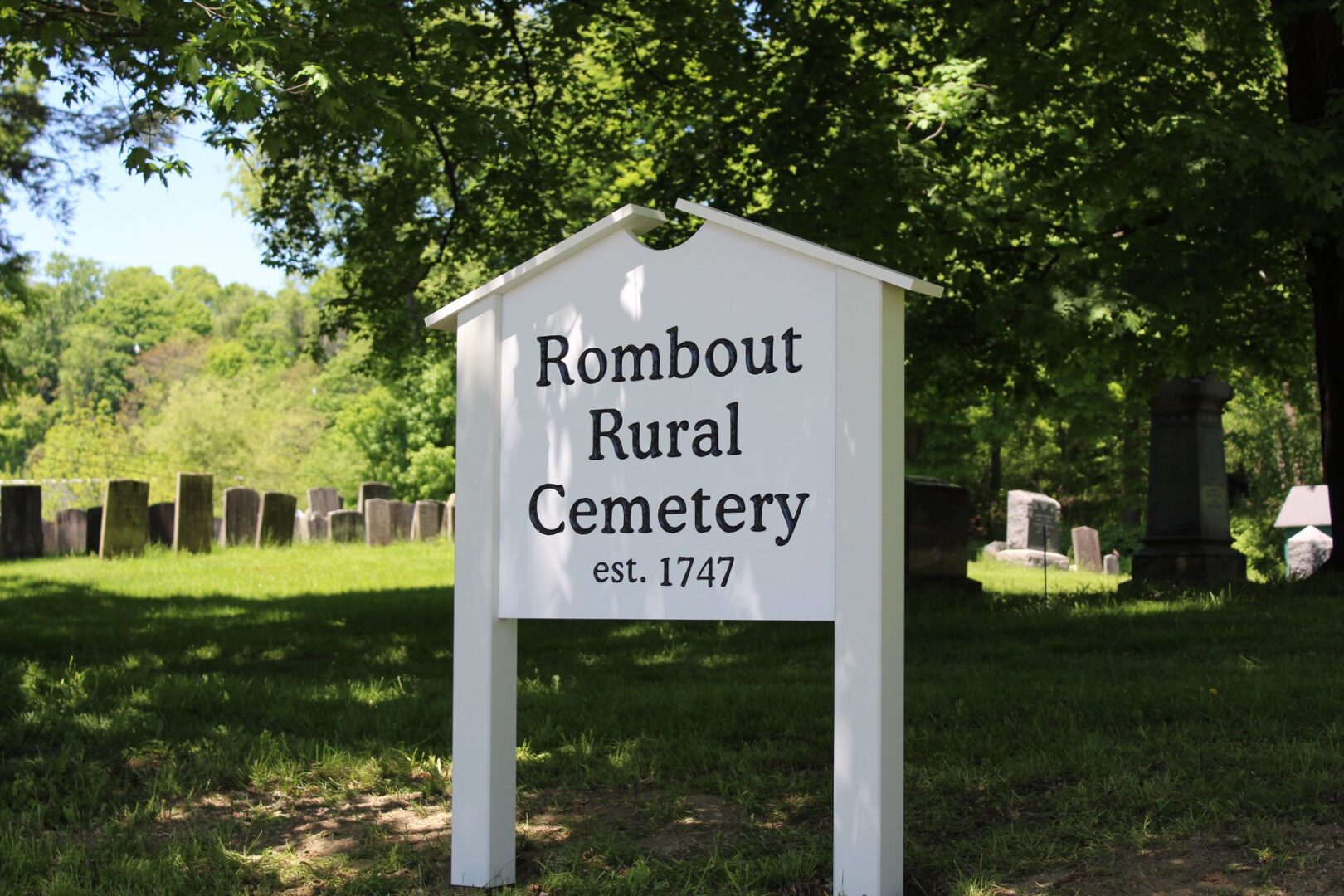
Following the war, Griffin represented Dutchess County in the New York State Assembly (1785–1787 and 1788–1790), continuing his legacy of public service. Colonel Jacob Griffin died on March 20, 1800, at the age of 69. He is buried in the Rombout Rural Cemetery, which was formerly known as the First Presbyterian Church of Fishkill
Rev. Chauncey Graham (1727-1784)
Reverend Chauncy Graham was born in 1727 in Stafford, Connecticut to Reverend John Graham of Ireland and Abigail Chauncey of New Hampshire (herself the daughter of a minister). He was one of eight children, two of whom followed in their father’s footsteps and became ministers. Reverend Graham studied theology at Yale College and received his license to preach in 1747. In 1747, the Rombout Presbyterian Church was established, and Reverend Graham became the congregation’s first minister. A congregation’s minister was a critical social and religious role during the colonial era, one that often linked them to locally prominent families. Therefore, it is not surprising that by 1750, Reverend Graham married Elizabeth Van Wyck, daughter of Judge Theodorus Van Wyck, Esq. (an elder in the Presbyterian Church) and Elizabeth Creed Van Wyck.
Reverand Graham is notable for several roles, events, and achievements in local and regional history. He is recognized for publishing four (4) sermons, one of which was given at Rombout. In 1760, he served as the chaplain on an extended expedition to Canada. Around 1764, Reverend Graham opened the first school in Fishkill, The First Academy, located a half a mile from the church. He was a noted physician and reportedly treated ill soldiers during the War for Independence. During the Revolution, Continental soldiers encamped nearby and used the church as a military hospital to treat smallpox. The soldiers did considerable damage to the structure by “stripping the siding… as high as they could to boil their camp kettles,” as well as to keep warm.
Similar to his father-in-law, Judge Theodorus Van Wyck, Reverend Graham owned enslaved black Americans.

Ruth Woolsey Griffin (April 1736 – August 16, 1825)
Ruth Woolsey was born in April 1736 in Bedford, Westchester County, New York, to Lieutenant Samuel Woolsey (1705–1770) and Anna Smith. The Woolsey family was among the respected colonial families in the region, known for their dedication to public service, military leadership, and religious contributions.
Around 1756, Ruth married Colonel Jacob Griffin, a prominent political and military leader in the Hudson River Valley. Settling in Fishkill, Dutchess County, the Griffins lived at the heart of Patriot activity during the American Revolution.
While Jacob Griffin served as a militia colonel and a member of the New York Provincial Congress, Ruth managed their household and raised ten children during these turbulent times, many of whom went on to marry into other influential Hudson Valley families.
Ruth herself lived through notable events, such as the Fishkill Tea Party in 1776, a rare female-led protest against wartime price gouging, which reflects the active role women played in the Revolution, even if her direct participation is unconfirmed.
She passed away on August 16, 1825, in Fishkill at the age of 89. She is buried in the Rombout Rural Cemetery, formerly known as the First Presbyterian Church of Fishkill or the Middle Presbyterian Church burial ground.
Elizabeth Creed Van Wyck
(Mar. 26, 1698 - Jan 5, 1764)
Elizabeth Creed Van Wyck, the first wife of Judge Theodorus Van Wyck, married on May 5th, 1720. Elizabeth was the daughter of William Creed and Mary Cornell Betts of Jamaica, Queens, New York.
She had fourteen children, five sons and nine daughters.
Elizabeth’s gravestone was carved by the prolific New York City carver John Zuricher. The first line of Elizabeth’s epitaph states that she “Died January 5, 1764. In The 66th Year of Her Age.” The following line is solely devoted to the acronym “H.M.S.” or Her Majesty’s Servant, suggesting she supported the British Crown.
At the time of Elizabeth’s death in 1764, the French and Indian War had only just ended, suggesting the family might have strongly supported the Crown.
Theodorus Van Wyck, Esq.
(Oct. 15, 1697 - Sept. 15, 1776)
Judge Theodorus Van Wyck., son of Theodorus Van Wyck and Margaret Brinckerhoff, lived an eventful and complicated life as an early surveyor for Madam Brett’s land in Fishkill Hook (today the hamlet of Wiccopee), an early judge on the Court of Common Pleas (appointed on February 24th, 1750), a founder of the First Presbyterian Church of Fishkill, a member of the Second Provincial Congress from 1775 until 1776, and as a slave holder.
At least two of Theodorus’s sons, William and Doctor Theodorus Van Wyck, were Continentals; Doctor Theodorus Van Wyck rented the home he inherited from his father to the future Supreme Court Justice John Jay and his family during the Revolution.
To the right (south) of Elizabeth’s gravestone is the gravestone of her husband, Judge Theodorus Van Wyck. According to his epitaph, Theodorus “was born the 15th of October 1697 and departed this Life the 15th day of September 1776 and in the first Year of the Independence of America.” The last line of the Judge’s epitaph is interesting, for it stands in stark political contrast to the acronym “H.M.S” listed on Elizabeth’s stone.
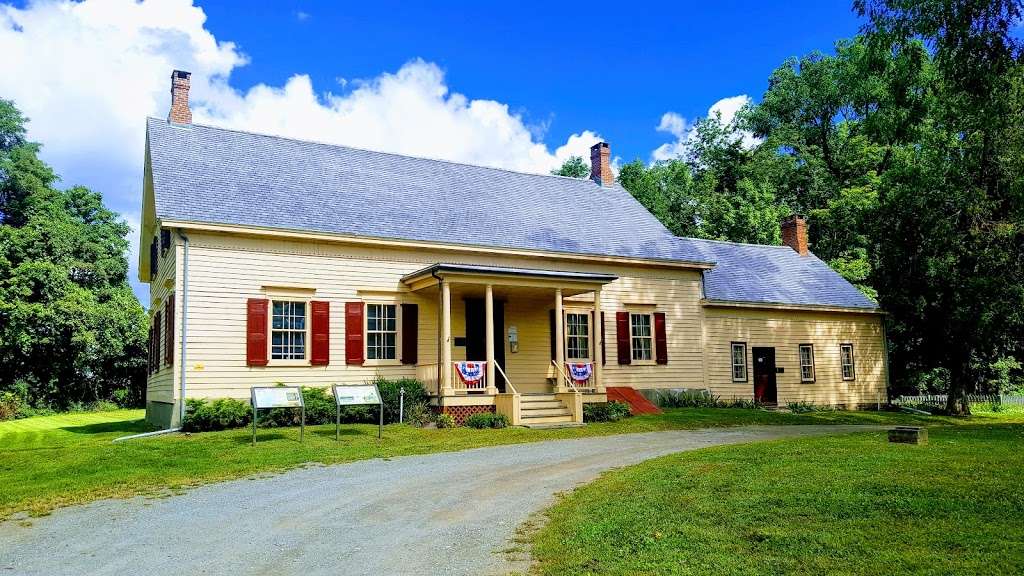
There are no patriots interred at the Van Wyck Homestead Museum, but many certainly toiled here during the American Revolution. The museum building is a colonial-era house built in 1732 by Cornelius and Hanna Van Wyck and is owned and operated by the Fishkill Historical Society. The Continental Army used the house as the Officers' Headquarters for the Fishkill Supply Depot during the Revolutionary War.
The Fishkill Supply Depot was a key strategic center of the American Revolution, established by General George Washington in October 1776 as a central location for storing and distributing supplies. Yearly, over 2,000 Continental Army soldiers were trained in Fishkill. Another 2,000 soldiers, craftspeople, and other supply depot supporters were housed year-round in barracks at the Fishkill Supply Depot encampment. The depot employed hundreds of workers, including skilled craftspeople, responsible for sourcing, manufacturing, maintaining, and repairing equipment to keep the army well-supplied. The Fishkill Supply Depot operated until the end of the American Revolution in November 1783.
The Fishkill Historical Society was founded in 1962 by residents who dedicated themselves to preserving the history of Fishkill and the Van Wyck Homestead. The founding members established the society to save the abandoned Homestead from imminent demolition due to the construction of a planned cloverleaf exit ramp for Interstate 84 at Route 9.
The Homestead has served as a historical museum since the 1970s. It is maintained and operated by volunteers of the Fishkill Historical Society. We are grateful to the founding members of this society for their foresight and perseverance in preserving and then restoring the Van Wyck Homestead, transforming it into a Revolutionary War-era Museum.